Compromise on Colorado’s Roan Plateau

This web exclusive appeared on hcn.org Nov. 22, 2014

The energy-rich Roan Plateau has been synonymous with the larger battle over oil and gas development on Colorado’s Western Slope for over a decade.

Rising 3,000 feet over small energy boomtowns with names like Rifle and Silt along the Colorado River, the former Naval Oil Shale Reserve hosts wilderness-quality roadless areas, a rare strain of native Colorado cutthroat trout, plants found nowhere else in the world, and crucial mule deer and elk habitat. It also happens to contain an estimated 8.9 trillion cubic feet of recoverable natural gas; the Bureau of Land Management’s 2008 sale of mineral leases to companies hoping to tap those riches was the highest grossing in the Lower 48 in history, at $113.9 million.

As you might expect, throwing those volatile elements together has produced results akin to dropping a chunk of pure potassium directly into a glass of water (hint: KaBOOM).

Shortly before the lease sale, ten environmental groups filed suit over BLM’s management plan governing the area, and the energy companies holding the leases joined the agency against them as defendants. In 2012, a district judge sent the plan back to the BLM on the grounds that it had failed to adequately analyze more protective options as well as air quality impacts; both the energy companies and environmental groups appealed. The fight appeared as though it would only continue to escalate and even helped inspire a murder mystery novel whose hunting guide heroine prefers to end a long day by downing a cold beer in a hot shower.

But on Friday, November 21, U.S. Interior Secretary Sally Jewell took the podium at the state capital building to announce that the parties involved had reached a landmark settlement that seems to make everyone happy. More…
 

The Uintah Basin’s tricky oil and gas ozone problem

This web exclusive appeared on hcn.org Nov. 4, 2014:

On a crisp fall day lined with cottonwoods yellow-bright as balls of flame, I take a gravel shortcut from Utah’s Nine Mile Canyon toward Vernal, an energy boomtown of some 10,000 souls. Though I’ve spent the day looking at natural gas wells going in along the fingers of the plateau that cradles Nine Mile’s storied rock art, I’m surprised by what I encounter shortly after hitting asphalt, popping up around each curve in time to Phil Collins crooning a Supremes cover on the radio: Pumpjacks. Everywhere.

You can’t hurry love
No you’ll just have to wait

Two tall as buildings nod up on the right.

She said love don’t come easy
It’s a game of give and take

Two more nod down the left. Then another two.

How long must I wait
How much more must I take

A prickling of several more on the mesa tops, and then

Before loneliness
Will cause my heart, heart to break?

the broad dome of dry-grass desert opens up to reveal a vista that is anything but lonely: Densely spaced oil wells and clustered tanks spread to the horizons. When I pull over and climb onto the shoulder, I can feel a vibration deep in my chest – hundreds of pumpjack engines rattling with flatulent backfires like impolite party guests.

If it were a cold, still day with snow carpeting the ground, there would likely be a lungful of nasty air to accompany this chorus, and a much hazier view. More…

Extreme makeover, the BLM episode

This web exclusive appeared on hcn.org on October 3, 2014:

No,  Planning 2.0 is not outdated tax software for your 1998 dinosaur of a PC. It’s the Bureau of Land Management’s attempt to add sanity, balance and nimbleness to the unwieldy and time-consuming process (yeah, still sounds like tax stuff, just bear with me) of updating resource management plans that govern what happens on millions of acres of public land.

It might sound boring, but it’s definitely important: If done well, it could give the agency tools to do a much better job protecting swaths of habitat and wildlife migration corridors that cross field office boundaries and state lines, siting and regulating development to avoid conflicts with people and sensitive ecosystems, changing course to meet new challenges on the ground, gathering and incorporating public input and heading off frustrating rounds of litigation, among other things. More…

War of the words

This web exclusive appeared on hcn.org Sept. 18, 2014

If you want a taste of just how confusing it can be to navigate the debate over oil and gas development’s environmental effects, look no further than recent news coverage:

From the Washington Post’s Wonkblog: “Study: Bad fracking techniques let methane flow into drinking water.”

And from The New York Times: “Well Leaks, Not Fracking, Are Linked to Fouled Water.”

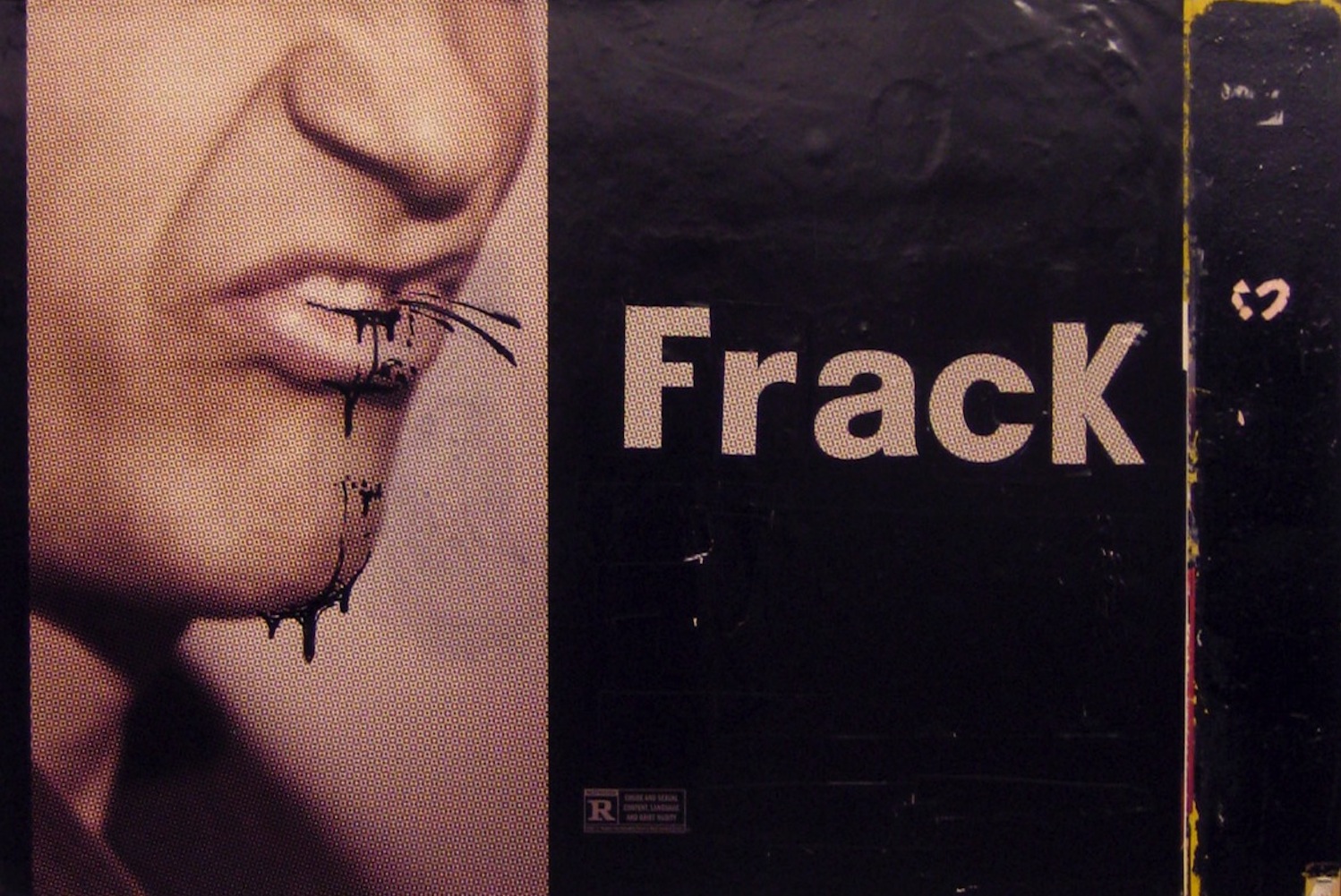
FEATURE FRACKReading those headlines, you might think: Well, jeez! Which scientists should I believe? Except that both stories describe the same study. Released this week in the Proceedings of the National Academy of Sciences, it surveyed 133 drinking water wells in Pennsylvania and Texas, and found that flaws or failures in some gas wells’ steel and cement casings – meant to seal in hydrocarbons and industrial fluids – are to blame for methane leaking into eight clusters of water wells in both states.

In other words, the study suggests that oil and gas development can, has and is contaminating drinking water in some places. But in these cases, hydraulic fracturing, or popularly, “fracking” – wherein a mix of water, sand and small amounts of chemicals is fired down the hole to break up rocks deep underground and release their hydrocarbon wealth – isn’t itself the root of the problem.

What the study inadvertently shows is how much our choice of words matters in public policy debates. In some circles – government, industry, academia – fracking describes only a discrete part of the well drilling and production process. And among others – environmental groups, the media, and increasingly, average folks trying to sort out the mess – fracking has become a scary-sounding catchall term for the universe of processes and infrastructure associated with oil and gas development. The former allows industry to claim – correctly – that fracking doesn’t pollute drinking water, and the latter allows opponents to claim – correctly – that it has. More…

Closure of federal sheep facility would be a victory for grizzlies

This piece originally appeared on High Country News’ Goat blog on Aug. 20, 2014

On the last day of August, 2012, a collared grizzly bear dubbed 726 by federal wildlife biologists vanished into the rugged Centennial Mountains on the Idaho-Montana border. A few weeks later, they recovered his collar near an established campsite. It appeared to have been cut, stoking suspicions that hunters may have shot the bear, a federally protected species, then hidden its carcass to avoid prosecution. Some environmental groups floated a more sinister theory (followed this June with a lawsuit), that the bear had been offed by a shepherd defending a flock that belonged not to a rancher, but to a federal institution: The Agricultural Research Service’s U.S. Sheep Experiment Station. More…

Is Canada’s massive mine waste spill a sign of things to come?

This blog appeared on High Country News’ Goat blog on Aug. 11, 2014

From behind a screen of trees, it comes as a dull roar: A gray churn of water and debris that overtops roads, snaps trunks, carves chunks of earth from banks as if they were butter. It looks like a flash flood, something you’d see coursing from the mouth of a redrock wash in Utah, a desert arroyo in New Mexico. But this is central British Columbia, with plenty of vegetation and porous soil to catch and slow rain.

Rise into the air in a helicopter, though, and the source creeps into view: A massive earthen-walled pond full of waste from the adjacent Mount Polley copper and gold strip mine, operated by Imperial Metals. The containment dam is rent by a steep new canyon where, sometime in the dark morning hours of August 4, a viscous slurry of pulverized rock vomited free across the dark conifer forest into adjacent Polley Lake and roared down Hazeltine Creek, widening it from 4 feet to 150 in places, before settling in Quesnal Lake. More…

ESA changes could help protect sage grouse on private land

This web exclusive appeared on hcn.org on May 20, 2014

In an increasingly subdivided and trailblazed West, southeastern Oregon’s Harney County is a place that can still make you feel small. From the empty blacktop two-lane highways 78 and 20, broad grasslands rise to sagebrush-studded mesas and hills that crest and break to the blue horizons like the landlocked waves of a parched sea. Drive-fast-with-your-windows-down country; 0.7-people-and-ten-times-as-many-cows-per-square-mile country; and, as it happens, excellent greater sage grouse country.

The chicken-sized ground-nesting bird, best known for elaborate mating dances and stubborn loyalty to ancestral mating grounds called leks, occupies massive swaths of 11 Western states and two Canadian provinces. And it has lately been figuratively looming over the region like a gigantic, balloon-chested, strutting Godzilla. More…

Will our ‘dam nation’ free its rivers?

This web exclusive appeared on hcn.org on May 17, 2014

“Ed would have shit his pants.”

Coming from just any 94-year-old, this teary proclamation might have seemed shocking. Coming from Colorado River folk hero Katie Lee – famous for her life-long environmental activism, melodies and modeling nude in the redrock embrace of Glen Canyon before it disappeared beneath Lake Powell – it was as high a compliment any devotee of Western letters could want. Throw in the fact that the “Ed” she spoke for is none other than her friend and fellow Glen Canyon Dam opponent, the curmudgeonly literary light Edward Abbey, and you couldn’t blame filmmakers Ben Knight, Travis Rummel and Matt Stoecker, seated beside Lee on stage at the 5Point Film Festival in Carbondale, Colorado late last month, for looking a bit teary and shell-shocked themselves as they got ready to discuss the object of Lee’s effusive praise: Their first feature-length documentary, DamNation. More…

Four women joyride the flood that will revive the Colorado River Delta

This web exclusive appeared on hcn.org on March 28, 2014

The guides warned us, of course. Or they sort of did.

It was sometime after the river outfitter’s shuttle van had passed through the latticework of gates and fences that guards the steep, hairpinned road to the boat-launch at the base of the Hoover Dam, and possibly right before we realized that we had left our two-burner stove back in Alison’s truck, in the parking lot of a casino hotel towering beigely over an otherwise nearly buildingless swath of desert around Lake Mead.

March 19 had dawned beautiful and bluebird in what we had dubbed Baja, Nevada – a 12-mile stretch of clear turquoise water with intermittent hotsprings through the Black Canyon of the Colorado River, where my three college lady friends and I planned to kayak at a luxuriantly sluggish pace for four days. Green rattlesnakes will chase you, the guides told us as we wound into the steep gorge. Scorpions will roost in your sandals. Brain-eating amoebas will Swiss-cheese your frontal lobes if you’re stupid enough to snort the hotspring water. And in the afternoon and at night, the water level can rise without warning as dam operators let more or less through Hoover’s hydroelectric turbines to feed fluctuating power demands in Arizona, Nevada and California. Make sure your gear is secure, the guides fingerwagged, and your kayaks well-tied overnight. Yes, of course, but the stove? we clamored. The eating of delicious things was, after all, a top priority. The guides exchanged glances. Tight federal security around the dam meant there would be no driving back for it. That left hoofing it out from the first side canyon, about a mile downriver. More…

A plague of tumbleweeds

This infographic appeared in the March 21, 2014 issue of High Country News

Tumbleweeds first engulfed J.D. Wright’s house in southeastern Colorado Nov. 17. Wind gusted up and there they were, piled so deep over doors and windows that Wright’s grandson had to dig him and his wife out with a front-end loader. “We had some bad weeds in the ’50s and ’70s (droughts),” Wright says, “but nothing like this.”

The skeletal orbs, also known as Russian thistle, aren’t newcomers; they wandered over from Eurasia in the 19th century. But Western drought has invigorated them as farmers fallow fields, ranchers stop grazing cattle that eat weed shoots, and native perennials wither. With so much bare soil, a burst of moisture last fall sparked a tumbleweed explosion. Now, packs of them scythe across the prairie, enthusiastically scattering seed. Colorado, Oklahoma, Texas and New Mexico have reported miles of blocked roads and weed mountains stacked behind fences and in ditches. A January windstorm buried a three-quarter-mile-by-half-mile section of Clovis, N.M., rooftop-to-rooftop in 435 tons of prickly mayhem.

The accumulation is more than inconvenient; it blocks emergency vehicles and boosts fire danger. But how the heck do you overcome a tumbleweed takeover of sci-fi proportions? More…

Also, check out the related web exclusive story for more details about Crowley County’s tumbleweed troubles.